Flow and Power Forecasting
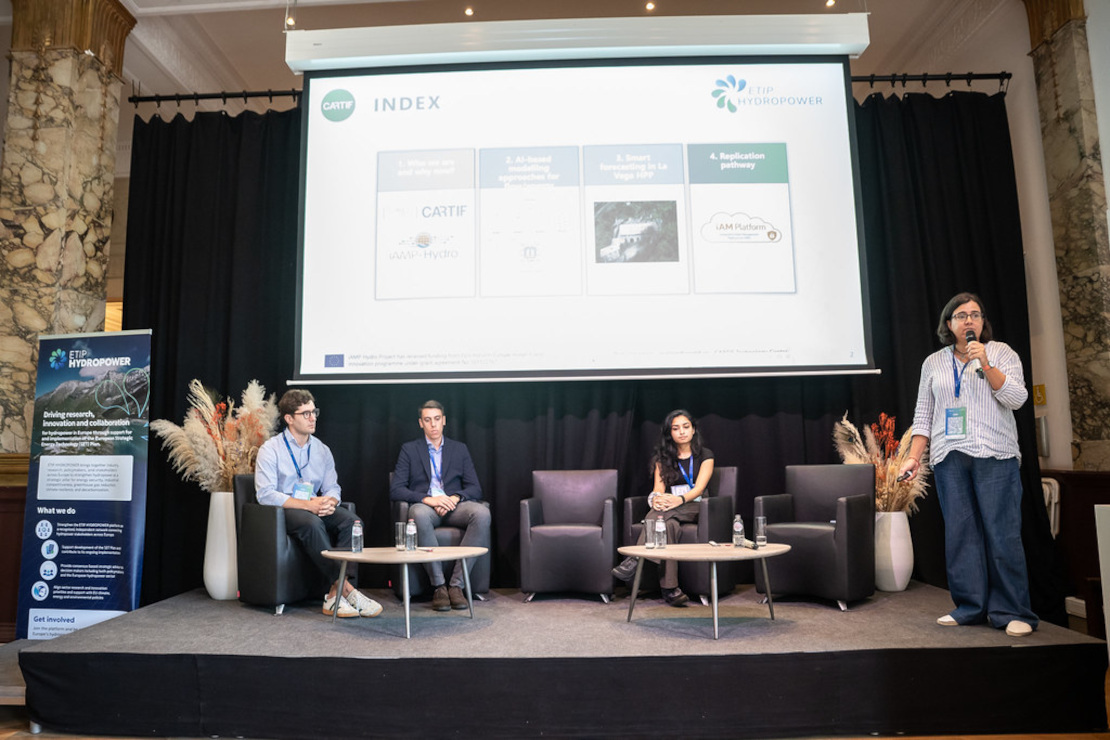
Forecasting was another key theme of the event. Raquel López Fernández from CARTIF Technology Centre presented the final results of iAMP-Hydro's work on flow and energy forecasting using advanced ensemble machine-learning models.
The developed forecasting approach combines hydrological, meteorological, and operational data with machine-learning methods such as Random Forest, XGBoost, Support Vector Regression, and Artificial Neural Networks. Rather than relying on a single algorithm, the project employed ensemble modelling approaches capable of capturing complex relationships between weather, water availability, and energy generation.
The methodology was validated at hydropower plants in Spain and Greece, including the La Vega and Asomata sites. Results showed that the developed models successfully captured seasonal patterns and operational dynamics, providing reliable forecasts up to seven days ahead. These forecasting capabilities can support reservoir management, generation planning, flexibility services, and market participation.
An important outcome of the work is its scalability. The forecasting framework can be deployed using existing operational and publicly available data without requiring additional sensors. Designed as a cloud-based service within the iAMP Platform, it offers a practical pathway towards wider adoption across European hydropower plants.
Find the full presentation HERE.
Condition Monitoring and Predictive Maintenance
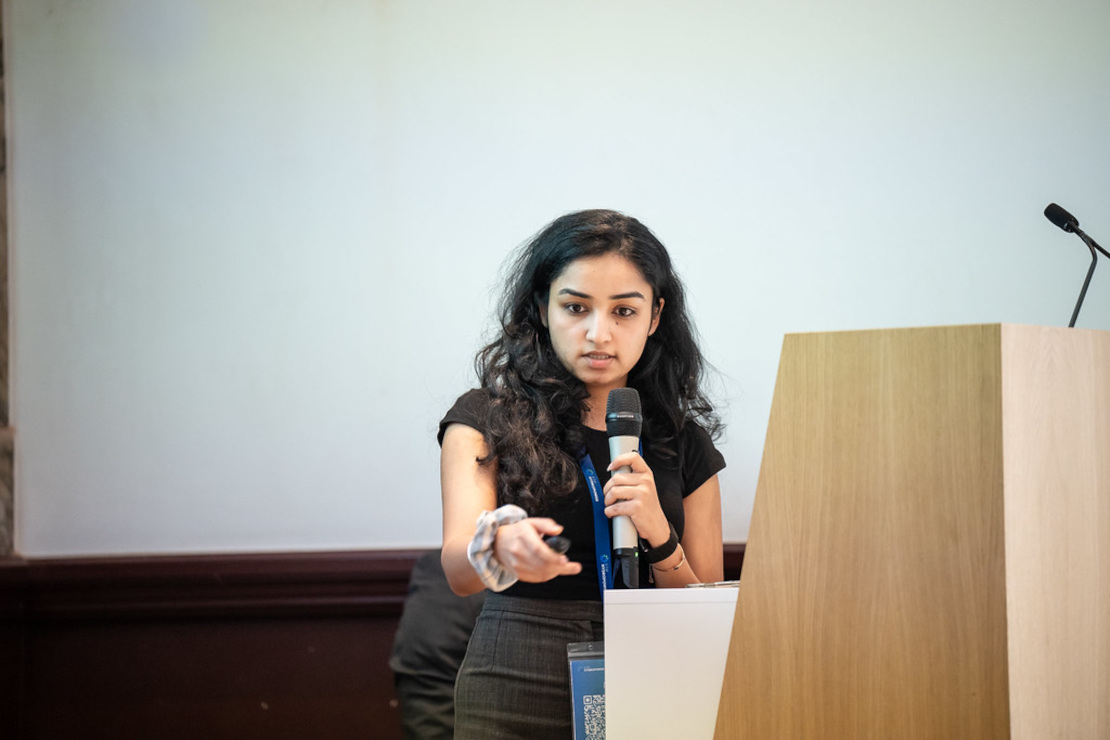
Among the most tangible benefits demonstrated during the project are those associated with condition monitoring and predictive maintenance. Bhavya Maheshwari from Easy Hydro Solutions presented AI-based solutions for cavitation detection, turbine-health diagnostics, and market-aware operational optimisation.
The results are highly encouraging. Cavitation-detection models achieved accuracies of up to 99%, while health-diagnosis models successfully distinguished between different stages of impeller degradation and linked these conditions directly to efficiency losses. Such capabilities provide operators with valuable information for proactive maintenance planning and risk reduction.
Bhavya also demonstrated how condition-monitoring information can be combined with inflow forecasts, energy-price forecasts, operational constraints, and environmental requirements to optimise plant operation. At the Asomata hydropower plant in Greece, the optimisation framework increased projected revenues by approximately 36% while using the same amount of water and producing virtually the same amount of energy.
These findings illustrate how digitalisation can simultaneously improve asset reliability, operational efficiency, and economic performance.
Find the full presentation HERE.
Shaping the Future of Intelligent Hydropower: Technology and Policy Needs
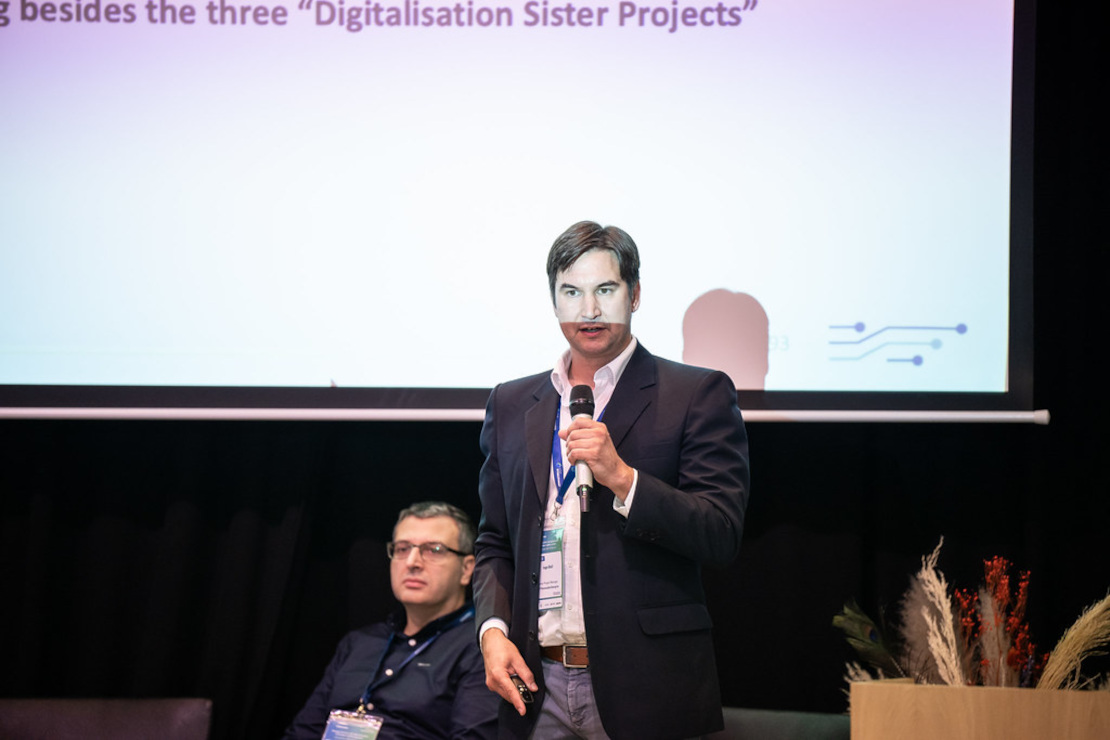
The final part of the session looked beyond individual technologies towards the broader transformation of the hydropower sector. Ingo Ball from WIP Renewable Energies facilitated an interactive micro-workshop that invited participants to contribute to the development of a Joint White Paper on Hydro Digitalisation.
The discussion explored how lessons from projects such as iAMP-Hydro, Di-Hydro, D-HYDROFLEX, and ReHydro can be combined into a common strategic vision. Topics included flexibility services, digital business models, best practices, environmental intelligence, OEM offerings, and future policy priorities.
A central conclusion emerging from the discussion was clear:
Europe needs a digital hydropower infrastructure capable of simultaneously supporting energy security, flexibility, biodiversity protection, climate adaptation, and efficient water management.
The planned White Paper will provide recommendations and practical examples that can support this transition.
Find the full presentation HERE.